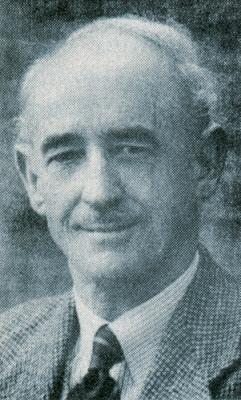
We present a selection of chess observations by David
James Morgan (1894-1978) in his Quotes and Queries column,
which ran in the BCM from 1953 to 1978:
‘In problemdom, the difference between plagiarism and
anticipation is the difference between foul and fair. The first
is plain thievery; the second is the accident of minds thinking
alike.’ (April 1953, page 103).
‘We do, indeed, favour the use of exclamation marks, sparingly
and pointedly: certainly no more than two after a move. But to
shake, vigorously, a pepper-box full of such marks is to make
them meaningless.’ (April 1953, page 103).
‘We can offer no observations on the “social distribution of
chess”. It should go with cockles and ginger-beer no less than
with oysters and champagne – if any game is at all possible on
such festive occasions.’ (May 1953, page 137).
‘The author in question is more of a pedlar than a pioneer. He
has, as you say, also published some problems, but you must not
confuse aspiration with inspiration.’ (October 1953, page 273).
‘To plagiarize somebody, we would say that to study chess
without books is to sail an uncharted sea, but to study books
without any practice is not to go to sea at all.’ (November
1953, page 309).
‘You have “no ambition to go beyond simple two-movers”. Your
early recantation will come in the words of the impatient
patient in hospital: “I’m tired of nourishment. I want something
to eat.”’ (February 1954, page 55).
‘Your wish for “games punctuated by the player’s own notes”
has much to be said for it. But there are players, even of
master strength, who are notoriously bad annotators, and their
games would be more punctured than punctuated.’ (February 1954,
page 55).
‘As to our “simple philosophy of chess”, we have never thought
of it that way. Perhaps it amounts to this: at the end of the
game the king and the pawn go into the same bag. And when we
fall into one of our frequent tragic (chess) lapses, we feel
that the best part of repentance lies in less sinning.’ (April
1954, page 111).
‘There is, of course, no such thing as “the best opening”.
Beginners, we have always felt, are best started on the Giuoco
Piano. With established players it largely becomes a question of
temperament. Some day we may have a book where openings will be
divided into the phlegmatic, the choleric, the stoic, the
mercuric, the ecstatic, the pacific, the philosophic, etc.,
etc.’ (July 1954, page 223)
‘We hazard no guesses as to the outcome of hypothetical
matches. Such predictions can so often become predicaments.’
(August 1954, page 264).
‘Yours is the occasional protest against matters problematical
(some such word as “problemistic” might sound less ambiguous)
which we receive. May we suggest a little more fellow-feeling
and less of the fellow-feline?’ (August 1954, page 265).
‘There are not many references to women’s chess in the
Victorian age. ... Chess, like other games, breathes more freely
in coatee and costume than it did in corset and crinolene.’
(September 1954, page 295).
‘It’s no use fuming at your opponent’s smoking. As your
Parisian library notices put it: “It is defence absolute to
fume.” Over the chessboard, so much depends on the mellowness of
the cheroot, meerschaum or hookah, the direction of the
prevailing wind, and so on. Due regard to such factors, and one
should be able to “fumer” without fumigating. We could suggest a
tournament for the un-nicotined: perhaps the de-nicotined could
also be admitted.’ (October 1954, page 329).
‘A game consists essentially of a quest, a con-quest and an
in-quest.’ (January 1955, page 32).
‘“The theory of the game has been written out ... chess needs
doctoring.” We couldn’t agree less. For instance, the whole
field of middle-game combinations needs codifying
scientifically. We would say, more doctrine and less doctoring.’
(February 1955, page 78).
‘It is not our wish to enter into “British chess politics”
here. Speaking generally, you cannot divorce politics from
policy, which amount to vice versus virtue, and vice versa. As
to your own little club affair, your need, as you say, is tact –
which quality is a matter of proving how far you can go too far:
hope you come out of it all intact.’ (March 1955, page 112).
‘Such a corner as this must, inevitably, become a hotch-potch
– call it medley, mélange, junk-shop, pot-pourri,
hodge-podge, or what you will. We can but plead with Byron,
“There is a pleasure in the pathless woods”.’ (March 1955, page
112).
‘As we have previously said, we won’t be drawn into personal
issues. We would hate to qualify for Robert Ross’s suggested
epitaph for his own tomb, “Here lies one whose name is writ in
hot water”. In other words, we are coy and refuse to be
de-coyed.’ (May 1955, page 163).
‘Chess is a game for the salon no less than for the
saloon.’ (July 1955, page 210).
‘Slamming down the pieces is as unnecessary as slamming a
swing door.’ (October 1956, page 284).
‘There can be nothing more satisfying than teaching the game
to young players, nothing more delusive than to look
deliberately for world champions. For every youngster with a
spark of genius there are plenty with ignition trouble.’
(November 1956, page 310).
‘It takes years of practice to become a master overnight, in
spite of prodigies.’ (April 1957, page 93).
‘“I find chess problems rather easy ...” We have a feeling you
would find all the Arts just as easy. Sculpture, for instance:
you just take a block of marble, a chisel, and a hammer, and
knock off all the bits of marble you don’t want.’ (September
1957, page 229).
‘There is a world of difference between “one who plays chess”
and “one who is a chessplayer”. There is more in it than “mere
verbal quibbling”. It is the difference between “a music critic”
and “a musical critic”.’ (October 1957, page 277).
‘“I like exciting chess, with the queen darting from
corner to corner in a straight line ...” Thurber has long
informed us that a straight line can be the dullest
distance between two points.’ (November 1957, page 296).
‘What connection there can be between chess and the ballet we
haven’t the remotest idea. We have read Fine’s thesis on
Psychology and Chessplayers, Dr Ernest Jones’ long essay on
Morphy, and other Freudian disquisitions on the activities and
symbolisms of the subconscious mind, but we fail to see the
bearing on your analogy. In ballet, we gather that a young man
twiddling his feet like an egg-whisk can be expressing a passion
for his stepmother. But where does chess come in? But then, we
had no stepmother.’ (January 1958, page 10).
‘“I play too impetuously ... and foolishly rush in where
angels, etc., ...” Rushing fools have more fun than refraining
angels.’ (January 1958, page 11).
‘... a chess master’s life, in one sense, is more of a
vagabondage than a bondage.’ (February 1958, page 47).
‘It is true that we have, from time to time, protested against
the continual re-appearance of the old classics in books. Which,
of course, means nothing against the classics. We simply object
to buying them over and over again. We may be peculiar, but we
do like fresh fish.’ (February 1958, page 47).
‘Have we any room for some lyrics on the game? Regrettably,
no. This is hardly the corner in which to shilly-shally with
Shelley, be it done surely or shyly.’ (March 1958, page 78).
‘We regret we find it difficult to work up any interest in
scores of games, or bits of scores, which carry no clue of any
kind as to source. Please give the who’s who, where’s where, and
when’s when.’ (April 1958, page 101).
‘There can be but one apology for such a lapse in the opening:
“I beg your Barden”.’ (July 1958, page 178).
‘As every schoolboy must know, it was Philidor (1726-1795) who
said that pawns are the soul of chess. This, in the best
paraphrase we can think of, means that pawns are the life and
soul of the partie.’ (August 1958, page 204).
‘Observation (by many of our friends) seems to bear you out
that chess is seldom seen in public houses. Contributory factors
may be the froth on the face of the beer as well as the frost on
the face of the barmaid. Bubble, babble and Bogoljubow do not
make for a happy blend.’ (December 1958, page 330).
‘The opponent who, especially when he has a bad game,
continuously taps the table with his pencil, will readily desist
on request. He is probably not aware of it – just tapping out
his morose code.’ (January 1959, page 17).
‘“Chess may be good for us socially but not physically ...”
The onion, of course, is in direct reverse to this.’ (February
1959, page 67).
‘We are pleased to learn that the boys you meet in matches are
such “good sports”. The trouble about being a “good sport” is
that you have to lose in order to prove it.’ (March 1959, page
83).
‘Many such defeats have been due to underestimating one’s
opponent. The unexpected sometimes happens when you don’t expect
a player to come up to expectations.’ (May 1959, page 153).
The quip about Gossip pottering and Potter gossiping at a club
is a pretty old one (W.N. Potter, 1840-1895). In chess it seems
that longevity is the soul of wit.’ (June 1959, page 185).
‘As for “putting it in a nutshell”, we can but sound glibly
pedagogic. The art of teaching the game to youngsters is the art
of making the complex simple, of going back from the
steam-engine to the kettle. And, of course, interest must be
roused and maintained. A youngster’s spirit may be willing – his
will must also be spirited.’ (June 1959, page 185).
‘To be an expert in chess is no excuse for forcing it on your
young son. It is as illogical as your being very fond of animals
and then making him a butcher.’ (July 1959, page 215).
‘The average age of the great players is much lower nowadays.
The one you mention is old enough to be a grandmaster – and
young enough to develop into one.’ (August 1959, page 229).
‘Of vital importance in all these Openings is not to let
memory swamp the mind.’ (October 1959, page 308).
‘Philidor certainly played a vitally important part in the
history of the game. But why “indispensable”? There has been
only one indispensable man in the whole of history – and that
was Adam.’ (November 1959, page 332).
‘The columns in books on chess openings must be read
correctly, like all other tables. Your method reminds us of the
buxom lady on the weighing machine who looked wistfully at the
chart above and then turned to her husband with, “According to
this table, dear, I should be six inches taller”.’ (March 1960,
page 74).
‘Great players are more made than born.’ (April 1960, page
99).
‘Raising money for chess is always a problem. But we could
hardly recommend your suggested methods. They would put the
peculation into speculation.’ (April 1960, page 99).
‘“A problem should have a climax” – we find this meaningless.
It’s often a climax without crescendo.’ (October 1960,
page 295).
‘“Men who spend hours at chess should be treated by a doctor.”
Men who spend hours at chess don’t care who treats them.’
(November 1960, page 329).
‘“I find it extremely difficult to get boys interested in
chess books.” Have you tried labelling them “For Adults
Only”? (November 1960, page 329).
‘We have no information “as to extent and popularity of
women’s chess clubs”. Women should be delightfully clubbable:
cave-men used to find them so.’ (December 1960, page 354).
‘Used properly, a book of “traps” will be useful without a
doubt. Learn from others’ mistakes – you haven’t time to make
them all yourself.’ (December 1962, page 359).
‘“I first judge a problem by counting the number of men in it
...” And you doubtless first judge a novel by counting the
number of words in it.’ (February 1963, page 49).
“Didn’t teenagers revolt against old-fashioned problems in
your young days ...?” Queerily enough, there didn’t seem to
be any teenagers in those days.’ (March 1963, page 81).
‘“I have seen no problems lately by W. Pauly: has he been
composing in recent years?” Alas! Poor Pauly has been
decomposing since 1934.’ (March 1963, page 81).
‘Briefly, in an endgame the solver is fighting against material
odds; in a problem he is fighting against time.’ (June
1963, page 182). See also Chess
Jottings.
‘Chessmen, like women and like bad photographs, can be
under-developed and over-exposed.’ (August 1963, page 245).
‘“... and I find the study of openings rather tiresome ...” It
is, of course, a matter of approach, logical and with
understanding rather than mechanical and parrot-wise. With
openings, familiarity breeds content.’ (August 1963, page 245).
‘The chess problem can be studied as a science and practised
as an art.’ (January 1964, page 18).
‘Across the chess board, bad mannerisms can be more
objectionable than bad manners.’ (January 1964, page 18).
‘We don’t mind an opponent looking at his watch during a game.
It’s only disconcerting when he shakes it as well.’ (March 1964,
page 79).
‘In chess, as in much else, good judgment comes from
experience. Experience comes from poor judgment. Never make the
same mistake twice. Make a new one.’ (March 1964, page 80).
‘“I seem to play like a master, but as for my results ...” We
also play the piano like Paderewski – we use both hands.’ (April
1964, page 107).
“How long does it take to learn the game?” It all depends. We
remember once visiting a young lads’ club, and were greeted at
the door by two bright ten-year-olds. “And do you wish to learn
to play chess?”, we asked one. “Oh no”, he replied, “it’s my
friend who wants to learn this time. I learned yesterday.” As we
said, it all depends.’ (May 1964, page 150).
‘Work through all the traps you can. But don’t forget, it is
not enough to learn all the tricks of the trade – you must learn
the trade.’ (July 1964, page 213).
‘A chess tournament is one in which all the players are
clock-eyed.’ (July 1964, page 214).
‘“I look on ‘brilliant endings’ and ‘pretty finishes’ purely
as a scientist, with no aesthetic overtones”, and you doubtless
say, when a pretty girl passes by, “Now there’s an arrangement
of molecules for you!”?’ (August 1964, page 242).
“I generally look back on the chess of the good old days.”
Nothing is more responsible for the good old days than a bad
memory.’ (August 1964, page 242).
‘It is no use “sticking to a problem till my head swims”. Put
it away for a brainy day.’ (October 1964, page 306).
‘Capturing that queen’s knight’s pawn by the queen is an old
temptation. The trouble with resisting temptation ... is that it
may never come again.’ (December 1964, page 364).
‘A chess problem, of course, must show economy of means
without economy of effects.’ (August 1965, page 237).
‘There were no early English chess books to correspond to
those from Spain and Italy. The game was well mediterraneanized
before it was anglicized.’ (November 1965, page 318).
‘After winning a game, it’s of interest to find out just where
you went right.’ (January 1966, page 10).
‘“The revolution of hypermodernism in the early twenties by
Breyer, Réti, etc., ...” We would say more revelation than
revolution: now all is part and parcel of modern theory. As in
so much else, the heresy of yesterday is the orthodoxy of
today.’ (November 1967, page 325).
‘He who cannot discover the beauties of a fine game without
the aid of notes is not likely to create beauties of his own.’
(February 1968, page 50).
‘Those cut-and-dried rules – knights before bishops; no moving
a piece twice in the opening; and so on – have their use in our
early chess days. Every dogma has its day. Progress comes when
you learn when to discard them.’ (March 1970, page 78).
‘But chess is an easy game; it’s your opponent that
makes it difficult. One advantage over bridge is that chess is
not a shin-bruising game. Finally, while the study of chess
theory will not necessarily make you a good player, it should
show where other players go wrong.’ (May 1970, page 157).
‘The best season for chess is winter, the time of year when it
gets later earlier.’ (May 1970, page 157).
‘We have no theories as to the running of a chess corner. We
pin our faith on those three eternal verities: The scissors are
mightier than the pen. When in doubt quote. Paste is thicker
than ink.’ (August 1970, page 225).
‘We read again that the King’s Gambit is dead. It never quite
recovered from its previous deaths.’ (August 1970, page 226).
‘“The secret of health on tournament and on all other
occasions lies in the eating of onions.” The trouble, of course,
is to keep the secret.’ (September 1970, page 269).
‘“Considering the conditions of tournament play, I am
surprised that there are no more blunders ...” We are of the
opinion that there are.’ (October 1970, page 287).
‘With modern medical advances, one day may well see the coming
of a Centenarians’ Chess Club. The terms for life membership
should be moderate.’ (October 1970, page 287).
‘A reporter said that he nearly fell asleep at a chess
tournament. Better luck next time.’ (December 1970, page 362).
‘We have heard of proposals to make chess championship matches
easier for spectators to follow. Not to the extent, we hope, of
numbering the players.’ (January 1971, page 27).
‘“When young players reach the middle game they come to a full
stop ...” We suggest that it’s more of a coma than a full stop.’
(February 1971, page 70).
‘Chess, we read, is being played regularly in the open air in
New York. For domestic reasons?’ (June 1971, page 212).
‘“When you sit down at a board you can always tell a good
player ...” Yes, but how much can you tell him?’ (August
1971, page 294).
‘Tom Eckersley asks how would Philidor be regarded today.
Surely as our oldest grandmaster.’ (September 1971, page 346).
‘A chessplayer died recently leaving a dozen chess clocks. The
executor had quite a busy time winding up his estate.’ (January
1972, page 36).
‘We note your remark that “elderly men talk less during a
game”. They usually have more to keep silent about.’ (May 1972,
page 186).
‘Many great players, we read, played their chess on an empty
stomach. Our incompetence is probably due to our having always
played on a chessboard.’ (May 1972, page 187).
‘We have read that a famous player says he can play better if
there are a lot of people whispering in the room. A triumph of
mind over mutter.’ (August 1972, page 296).
‘A thousand threepenny stamps were stolen from a North Wales
Post Office recently. The police are looking for anyone starting
a correspondence game.’ (October 1972, page 400).
‘A continental magazine reported that a 120-year-old Turkish
chessplayer was dangerously ill. We hope his parents were sent
for.’ (November 1972, page 449).
‘“Of all seaside resorts”, says a gossip writer, “give me
Hastings.” We understand, however, that Mr L.A.J. Glyde refuses
to part with it.’ (January 1973, page 44).
‘Fred Atkins feels that chess needs overhauling ... But hasn’t
it had too long a start?’ (April 1973, page 172).
‘Where you can start a chess column we have no idea. Have you
tried The Pigeon Fanciers’ Gazette?’ (August 1973, page
349).
‘Chess, like love, is a conflict between reflexes and
reflections.’ (October 1973, page 446).
‘“A grandmaster”, said a well-known player recently, “must be
born”. It certainly is an advantage.’ (February 1974, page 78).
‘“It’s surprising the number of chessplayers who die between
80 and 90 years of age.” We have always felt this was a
dangerous age.’ (May 1974, page 174).
‘“The squares on a chessboard are all equal”, says a new guide
to the game. We shall just go on playing as if the discovery had
not been made.’ (June 1974, page 204).
‘Edgar Harper from Philadelphia is very much interested in the
state of our own chess. We just march triumphantly from one
defeat to another.’ (June 1974, page 206).
‘Yes, chess-ing can be hereditary. You can get it from your
children.’ (July 1974, page 240).
‘A writer, on the Nice Olympiad, said the players did not seem
to be so well dressed as at the Siegen Olympiad, 1970. Of course
not. Their clothes were four years older.’ (November 1974, page
419).
‘A chess master confesses that a hard game leaves him cold.
Thicker underwear is indicated.’ (May 1975, page 221).
‘Post-mortem analyses can be extremely valuable. So, of
course, can be ante-mortem analyses.’ (June 1975, page 268).
‘We have seen it estimated that 2% of our people play chess.
Possibly 2% of chessplayers do the same.’ (September 1975, page
413).
‘A chess optimist is one who thinks he will never do anything
as stupid again.’ (November 1975, page 509).
‘“When I travel in the realms of chess ...” Wonderful. As long
as you’re a traveller and not a tripper.’ (January 1976, page
28).
‘We noticed recently that the name (not the initial) of a
Chinese player was I. We wonder what he is called for short.’
(March 1976, page 124).
‘There’s one thing about chess stardom, it does not come in a
twinkle.’ (May 1976, page 221).
‘It’s sad to know everything about chess – except how to enjoy
it.’ (November 1976, page 512).
‘We read that So-and-so is a young player to be watched. We
could name one or two older ones who should be kept under
observation.’ (December 1976, page 568).
‘“How much reading books on openings is good for one?” Like
much eating – wholly useless without digestion.’ (March 1977,
page 141).
‘The more openings you learn the more you learn how little you
know.’ (December 1977, page 570).
‘We are glad you are “getting your teeth into the game”.
Perhaps we can adapt Walter Bagehot (in a totally different
connection) and suggest that chessplayers can be divided into
incisors and grinders.’ (January 1978, page 33).
From the correspondence section in the June 1952 CHESS,
page 180:
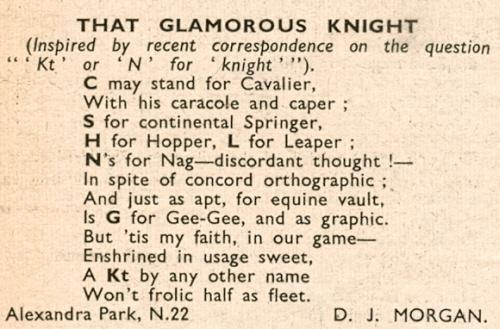
That stylish writer D.J. Morgan (1894-1978) was particularly
interested in problems, but what is known about any compositions
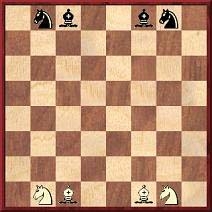
by him? The position below appeared in his Quotes & Queries
column on page 487 of the December 1972 BCM:
‘For the Quiet Half-hour. Put the knights and bishops on their
home squares, as shown. Move one piece at a time, white and
black alternately, so that the two colours shall exchange
places, without any piece being attacked by, or attacking,
another piece of opposite colour during the course of play. A
knight can cross over to the king’s or the queen’s side. It can
be done readily in 16 moves, but save a move and do it in 15.’
Was Morgan the composer? Such was explicitly stated on page 33 of
The Book of Extraordinary Chess Problems by Stephen Addison
(Ramsbury, 1989).
(4076)
Michael McDowell (Westcliff-on-sea, England) points out that the
obituary of D.J. Morgan by G.W. Chandler on page 246 of The
Problemist, September 1978 specifically stated that ‘he was
not a composer’.
(4081)
The task was to exchange the positions of the pieces without any
attacks on pieces of the opposite colour. D.J. Morgan gave the
solution as follows on page 45 of the January 1973 BCM: 1
Nc3 Nd7 2 Na2 Nc5 3 Nb4 Ne7 4 Nf3 Nf5 5 Ba3 Bh6 6 Nh2 Ne4 7 Nc6
Bd2 8 Ng4 Nc3 9 Bh3 Ba6 10 Bf8 Ng3 11 Nf6 Bc1 12 Bd7 Bf1 13 Bc8
Nge2 14 Nb8 Nb1 15 Ng8 Ng1.
He commented:
‘It will be found that the knights alone on the board require
ten moves on each side to change places. (A king’s knight cannot
change places with a queen’s knight in four moves without
attacking one another.) The bishops, similarly taken alone, need
six moves on each side. But, working them together, it is
possible to save a move on each side with the bishops by the
stratagem, as shown, of screening them with two knights and so
enabling one bishop of each colour to make its journey in only
two moves, and its opponent in three moves.’
(4127)
‘My favorite chess writer’ is how Andrew Soltis described D.J.
Morgan in a good article on pages 8-9 of Chess Life, June
1983 which was reproduced, under the title ‘Master of His Craft’,
on pages 166-170 of Soltis’ book Karl Marx Plays Chess
(New York, 1991).
An eminent writer who paid tribute to Morgan was G.H. Diggle, and
below we reproduce his words (originally printed in the July 1978
Newsflash) from page 36 of a compilation of his articles
published by us, Chess Characters (Geneva, 1984):
‘The late D.J. Morgan, who died on 13 May – the day after his
84th birthday – called himself “a mere hotchpot corner filler in
the BCM”. There is perhaps a grain of truth in this
estimate, for profound as was his knowledge of chess and its
history from every angle and brilliantly as he could write when
he chose to compose a set piece (as for example his classic
article on the BCM’s 75th Anniversary) it is for “Quotes
and Queries” that he will always be best remembered.
He opened his weird chess supermarket in the BCM of
March 1953 with the following words: “We offer brief replies to
queries of general interest on any aspect of the game. When we
fail we will appeal to readers!” The only “goods” he would not
touch were the three awkward “A’s”, analysis, annotations and
adjudications. He had a boyish love for Guinness Book of
Records chess items, and would order his readers out on
research sprees and sometimes wild goose chases. “Come on”, he
would bully them, “what is the record for castling in Master
Chess?” (The BM timidly suggested Steinitz (on his 32nd move) in
a match game v Zukertort, 1886, only to be demolished by R.W.B.
Clarke, who unearthed Yates (on his 36th move) against Alekhine
(San Remo, 1930). Still more exciting was a “Lingering Pawn”
investigation in which it was discovered that in a Championship
Match game against Lasker, Schlechter’s King’s Pawn remained
stationary for 71 moves on its own square, whilst in Gottschall
v Tarrasch (Nuremberg, 1888) the parsimonious Doctor kept all
his pawns until the 69th move, the game ending on the 100th with
his QRP still at its base.
His resource in repartee never flagged, and he was a supreme
chess “ad libber”. To a querist who wrote in and said rather
cryptically, “I first judge a problem by counting the number of
pieces in it” D.J.M replied, “You doubtless first judge a novel
by counting the number of words in it.” Q. “I have seen no
problem lately by W... Has he been composing in recent years?”
A. “Alas! He has been decomposing since 1934.” Q. “I find it
extremely difficult to get boys interested in chess books?” A.
“Have you tried labelling them ‘For adults only’?” “Chess
Champions”, D.J.M. once informed a correspondent – during the
lean pre-Fischer era – “are born not paid”. Occasionally he
could be cutting: “The author in question is more of a pedlar
than a pioneer. You must not confuse aspiration with
inspiration.”
He “reigned” for just 25 years (and 3,932 “quotes”) over a vast
expanse of loyal and grateful subjects of every land and every
nationality. “We shall not look on his like again.”’
(4184)
Below is the exact wording and source of one of the Morganisms (a
reply to ‘Roy P.’) cited by G.H. Diggle in the tribute reproduced
in C.N. 4184:
‘“I have seen no problems lately by W. Pauly: has he been
composing in recent years?” Alas! Poor Pauly has been
decomposing since 1934.’
Source: BCM, March 1963, page 81.
David Woolrich (Bolton, England) points out that this repeats a
quip (about Bach) widely attributed to W.S. Gilbert (1836-1911).
(4194)
It may be recalled that D.J. Morgan’s son is the eminent
historian Kenneth O. Morgan, now Lord Morgan. We are very grateful
to him for sending the following memoir:
‘My father was a most able, quiet man of great modesty. He
was born on 11 May 1894 (not 12 May as commonly stated) and
died on 13 May 1978. He was the eldest son of a humble Welsh
blacksmith at Talybont, north Cardiganshire, a few miles from
Aberystwyth. He went to Ardwyn school in Aberystwyth, then
Bangor Normal college (clearly there was scant prospect of one
of so poor background going to university then). He served in
the army in the First World War (Royal engineers) in 1916-18,
under Allenby on the Palestine front, and had many stories of
seeing the Sphinx, etc. He picked up an interest in chess, I
believe, in Liverpool as a young teacher after the War, and
among other things played against Alekhine in a simultaneous
display. He used to tell of his amazement of Alekhine’s ease
of recollection of a fatal move my father had made in this
game which led to inevitable defeat. He married my mother,
Margaret Owen, in 1930 and I was their only son, born on 16
May 1934. My father had a very strong interest in chess all
the time I knew him; he spent time working out chess problems
and reading up chess history as an air-raid warden during the
blitz, and after the War organized boys’ tournaments in St
Bride’s Institute, Fleet Street and various championships. He
took me to a big tournament in London in 1946, where I saw
such masters as Tartakower. He knew the Penrose family well –
Jonathan was a friend of mine at school, in the history sixth
form. Around the early 1950s, my father moved from B.H. Wood’s
CHESS to working with Brian Reilly as an associate editor
of the British Chess Magazine and kept up his Quotes
and Queries column for decades down to his death in 1978. He
ran a kind of league table of chess problems which men like
Sir Halford Reddish and G. Wigham Richardson took part in. I
gave him a few historical snippets, including an entry on
Bonar Law’s prowess as a chessplayer. He knew such players as
Alexander and Barden, and one memory I have is of Keres, the
number two in the world, visiting our little home in Wood
Green and being impressed that I knew (via postage stamps)
where Estonia, his native land, was.
I had little interest in chess myself, though I found the
game fascinating, but I enormously respected my father’s
expertise in the game, and knew he was highly regarded. In
fact, he was far from obsessive, and had a huge range of
interests. He was more interested in cricket than in chess,
and got me going in the game. He was a quiet secondary modern
teacher in Islington (Shelbourne Road school) teaching
English, mathematics and science, but had a huge interest in
reading, poetry, history, etc., was remarkably skilful with
his hands in carpentry and could have had a far more elevated
career, but enjoyed his happy family life and his chess. He
had strong political interests (left-wing Labour) and, as
chess editor of Lady Rhondda’s Time and Tide for a
while, was delighted when readers of that right-wing journal
objected to so many Russians appearing in his column. He
responded by doubling the number. He was also a very proud
Welshman, totally bilingual in Welsh and English, and worked
to promote the game in Wales. He had no religious views but
regularly attended chapel (Calv. Methodist) because he liked
to hear Welsh sermons. I myself have been at Oxford for about
25 years, a university vice-chancellor and am now a Labour
peer, but I have always believed my father was more able than
I was and could have risen to high things in his turn. I am
immensely indebted to him as a highly intelligent and
compassionate man, a wonderful husband and father who became a
grandfather at the end of his long life, and a tremendous
influence on my outlook and mind.’
(4203)
Further to C.N. 4203, below is part of a letter to us dated 26
July 1977 from D.J. Morgan concerning his meeting with Alekhine:
‘A happy memory comes to mind.
After returning from the First War I belonged to the
Liverpool C.C. Somewhere early in the 1920s A. came round to
give a blindfold exhibition. I was one of the ten victims.
Following the show three of us went back with him to his
little hotel (The Angel, Dale St., I remember). We saw the
dawn of the next day.
I happen to ask where I went wrong.
“Ah. Board 8, you played 21 B-B4. No! No!! Kt-Kt5 eh?”
I had no idea; from memory!
In a tin box under his iron bedstead he had the MS of his
“Best Games”.
A powerful, pleasant personality.’
That admirable book Alexander Alekhine’s Chess Games,
1902-1946 by Leonard M. Skinner and Robert G.P. Verhoeven
(Jefferson, 1998) lists, on page 770, only one exhibition (not
blindfold) by Alekhine in Liverpool. It was on 29 September 1923,
he scored +24 –1 =6, and one of the victories was over E. Spencer
(see game one in Alekhine’s book Auf dem Wege zur
Weltmeisterschaft). Can any reader in the Liverpool area
kindly do a little hunting in local records to trace the blindfold
display?
(4204)
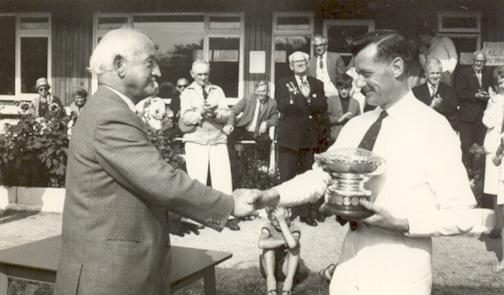
Lord Morgan (Oxford, England) submits a photograph of his father,
D.J. Morgan (left), at the prize-giving ceremony of a bowls
tournament in Aberystwyth, circa 1966:
(4724)
Pages 217-235 of the 1953-54 edition of the British Chess
Federation Year-Book had an article which is a valuable
aid to research: ‘The British Chess Federation – Fifty Years in
Retrospect’ by D.J. Morgan.
(4836)
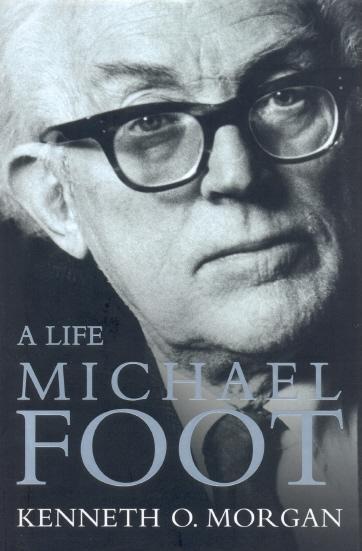
In C.N. 4203 Lord Morgan presented a tribute to his father, that
exceptional chess writer D.J. Morgan (1894-1978), and below we
quote a brief chess-related passage from Lord Morgan’s latest
book, a biography
of
Michael Foot. Born in 1913, the British politician was the
leader of the Labour Party from 1980 to 1983, and the dust jacket
carries a fine quotation by him (from page 489): ‘Men of power
have no time to read; yet the men who do not read are unfit for
power.’
The chess text appears on pages 109-110 and relates to Foot’s
first term in the House of Commons, to which he was elected in
1945:
‘Foot also liked the parliamentary atmosphere, the chatter and
conspiracy in smoking room and tea room, the ready access to
Fleet Street friends. He enjoyed too some of the extra-mural
activities, especially the group of MPs who played chess. Leslie
Hale was his favoured opponent. Foot was recognized as being
amongst the best parliamentary players, though it was agreed
that the strongest was Julius Silverman. Others of note were
Douglas Jay, Reginald Paget, Maurice Edelman and Maurice Orbach,
with Jim Callaghan another, less talented, enthusiast. The
world’s dominant players were Russian, and Foot met several
grandmasters when an international tournament was held in London
in 1946.’
(4907)
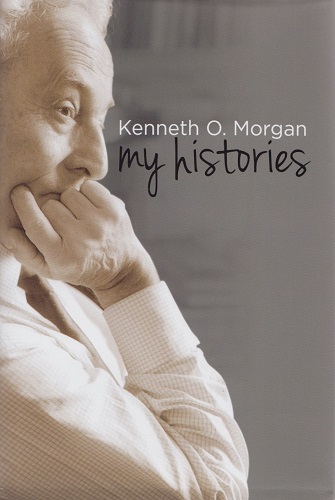
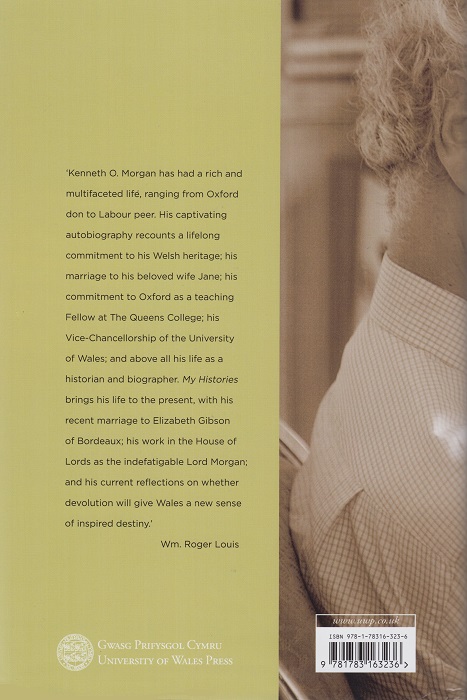
Much biographical information about D.J. Morgan appears in his
son’s memoirs, which have just been published: My
Histories by Kenneth O. Morgan (Cardiff, 2015).
Page 6 refers to D.J.M.’s encounter with Alekhine in 1923 and
states:
‘He was a quiet scholarly person of extraordinarily broad
culture. Indeed, I think he was probably the ablest man I have
ever known, and I was truly fortunate to have him as a father.’
And from page 7:
‘His abiding interest was chess – both problems and games –
which gave scope both for his mathematical gifts and his
abilities as a crisp writer. He wrote a famous monthly column
“Quotes and Queries” for the British Chess Magazine
right down to the month of his death in 1978. I was delighted in
Aberystwyth, in 1995, when we appointed a History Professor who
told me he had read my father’s column avidly. For him, I was
just the son of the famous D.J. Morgan and I was overjoyed to
know it.’
The Professor was William D. Rubinstein.
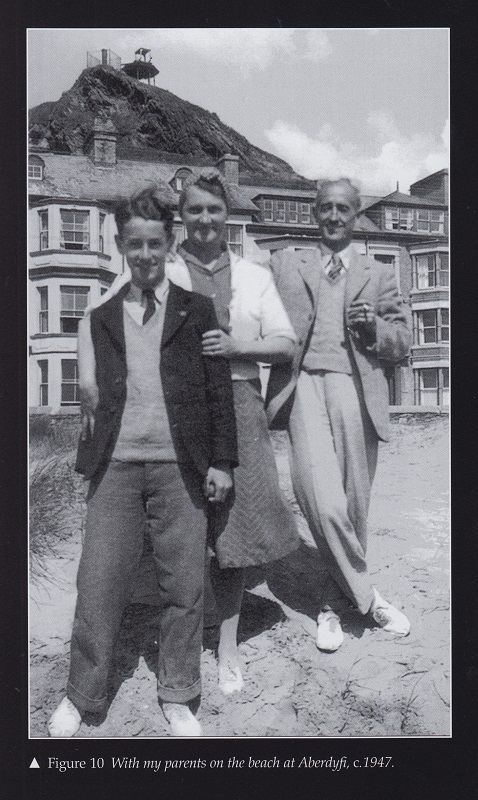
With Professor Lord Morgan’s permission, we reproduce a
photograph from the first plate section:
(9461)
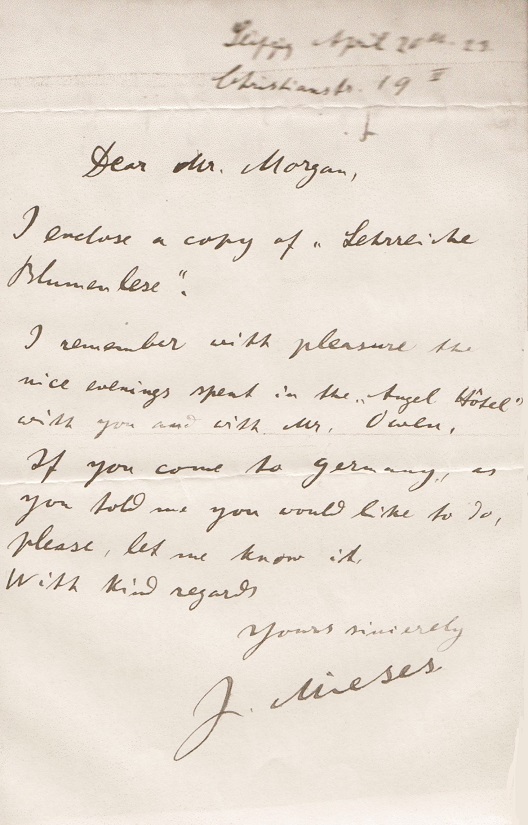
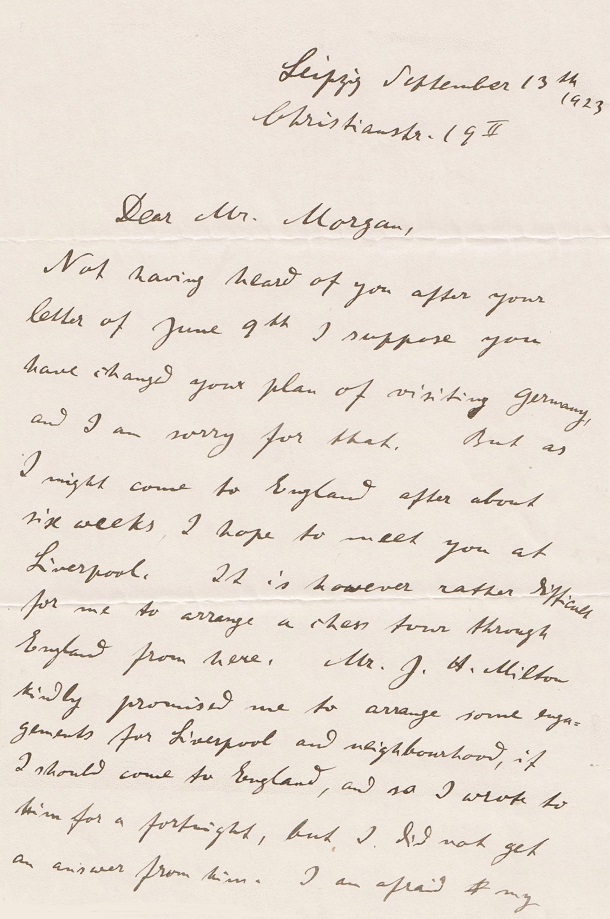
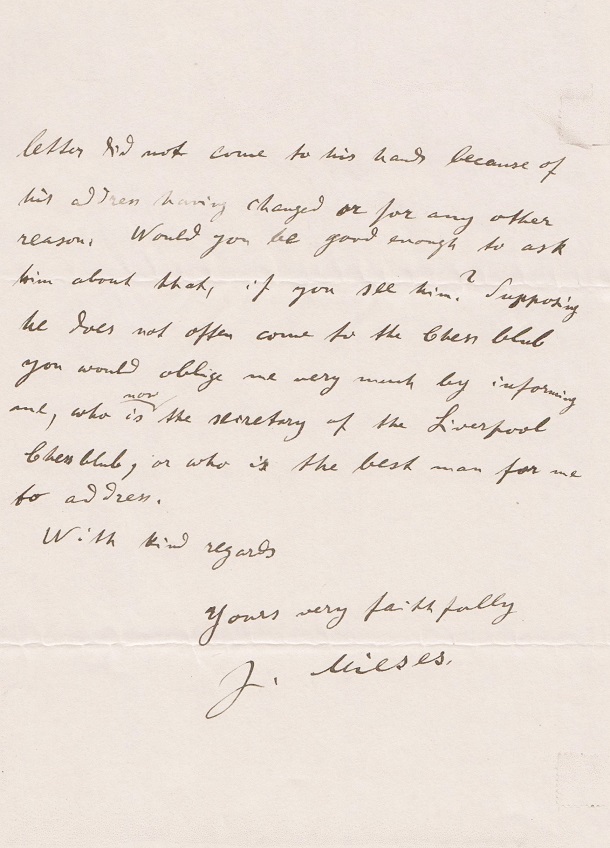
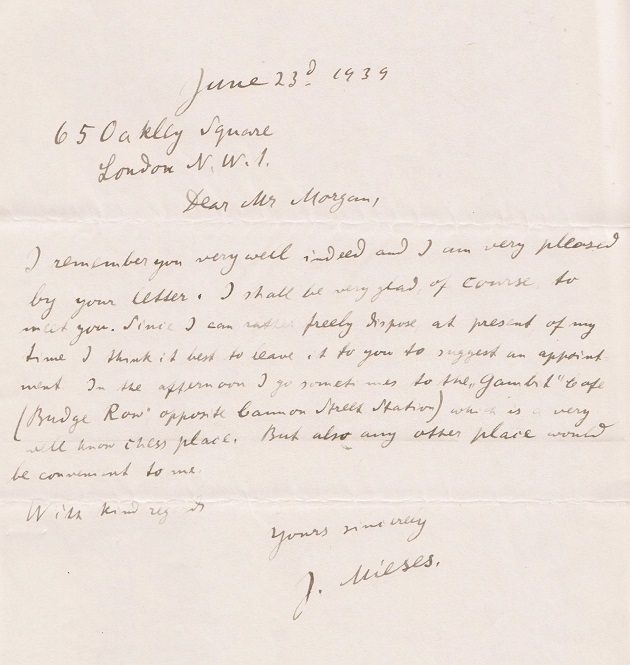
Professor Lord Morgan has forwarded us copies of three letters
sent to his father, D.J. Morgan, by Jacques Mieses:
(11331)
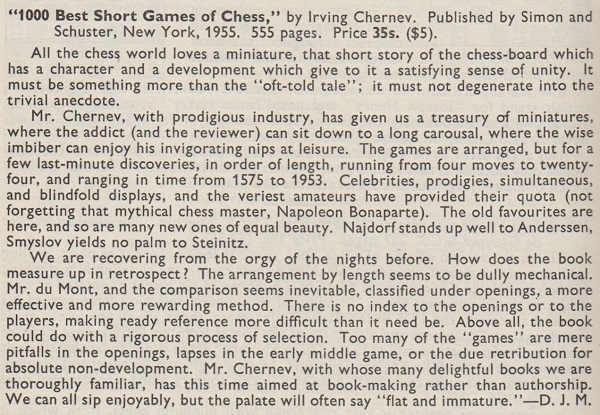
Page 324 of the November 1955 BCM had an assessment by
D.J. Morgan of Chernev’s 1000 Best Short Games of Chess:
(11013)
In his Preface to Chess Characters (Geneva, 1984) G.H.
Diggle mentioned that until 1974 the British Chess
Federation publication Newsflash had a column by D.J.
Morgan. Does any reader have a run of that column?
(11866)
Alan Slomson (Leeds, England) writes that the columns of D.J.
Morgan in Newsflash ran from issue 25 (30 November 1968)
to issue 88 (1 March 1974). They covered all the British
Championships from Hastings, 1904 to Eastbourne, 1973, giving just
the result, a few comments and one game (material based on what
the relevant year’s BCM had published).
(11877)
See also the coverage of D.J. Morgan and the magazine Junior
Chess in Chess
Book Chats, 25 May 2016.