Edward Winter

Amos Burn (see C.N. 12210 below)
The report of Amos Burn’s decease in the West London Observer of Friday, 27 November 1925, page 9:

One notes a discrepancy between ‘Wednesday morning’ and ‘2 p.m.’.
(85)
In common with some other newspapers, page 13 of the Liverpool Daily Post, 26 November 1925 identified Burn’s friend as a ‘fellow-member of the committee of the City of London Chess Club, Mr G.E. Smith’.
Where Did They Live? records that, as stated by R.N. Coles on page 7 of Amos Burn, The Quiet Chessmaster, the master lived at 19 Luxemburg Gardens, London W6.
On page 22 of The Observer, 29 November 1925 Brian Harley wrote:
‘His column in The Field was a classic in its way, but no jests were allowed to creep in. A very few days before his sudden death I passed him, a wraith in the darkness, making his way to his second home, the City of London Club. “And is old Double dead?”’
The Liverpool Echo, 16 January 1926, page 13 reported that Burn ‘left £2,408 (net personalty £2,358)’.
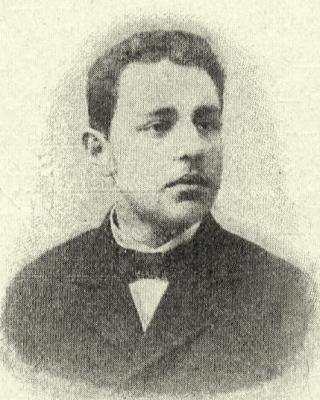
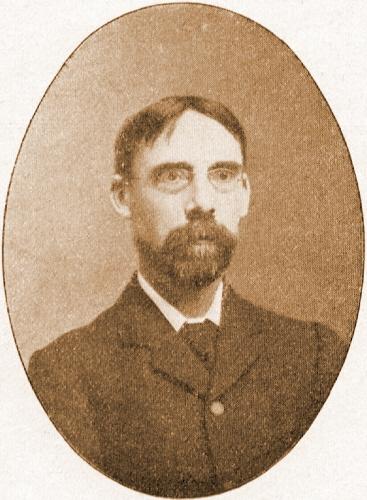
The frontispiece to the January 1926 issue of the BCM:

As mentioned in C.N. 4479, it was in the background of a photograph of Géza Maróczy contributed by Michael Clapham (Ipswich, England):


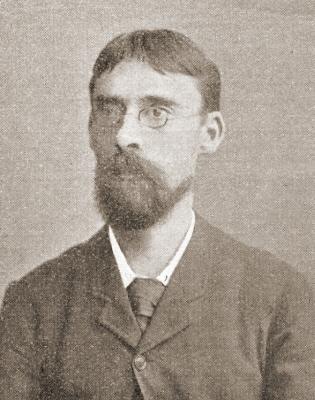
A relatively early photograph of Burn on page 129 of the January 1889 Chess Monthly:

Earlier this year [1983] W.H. Cozens brought to our attention the fact that a manuscript prepared by the late R.N. Coles – a games collection of Amos Burn – remained unpublished still; nobody could be found to bring out an edition. This, of course, is a reflection of the times, since many worthy projects fail to come to fruition now because publishers cannot afford to take the risk of doing small, sometimes slow-selling, limited editions. Even so, it came as a shock to learn that the BCM board turned down the idea of printing the Coles work as a ‘Quarterly’. Thanks to the kindness of Mr Graham Smith of Guildford, England, the Burn manuscript is now in our hands, and we plan to publish it ourselves ...
(549)

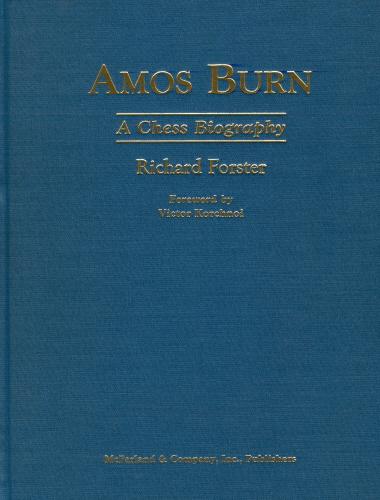
Two decades later, the Coles book was Richard Forster’s inspiration for producing one of the largest chess biographies ever written, as noted in C.N. 3403:
If there is one chess book, among all others, that we would be immensely proud to have written ourselves it is Amos Burn A Chess Biography by Richard Forster (Jefferson, 2004). An impeccable McFarland hardback of 972 pages, it is simply of matchless quality.
(3403)
The publisher subsequently brought out a paperback edition in two volumes.
Victor Korchnoi’s interest in, and respect for, the great masters of the past was shown, inter alia, by his Foreword to the above book.
Several rather hard quiz questions have been given here of late, but readers should have no difficulty with the following one:
a) Which chess book published by McFarland in 2004 has been praised to the skies by critics and has been described by Nigel Short (in the Sunday Telegraph of 12 December 2004) as his ‘favourite tome of the year’?
b) Which chess book published by McFarland in 2004 has the Chess Café/USCF Sales refused to stock or review?
(3550)
The BCM has produced a neat tournament book (exceptionally well illustrated with photographs of the competitors and of their score-sheets – although in the case of the latter it is not always made clear who was the writer) which has excellent annotations from a wide variety of sources. The editor, Raymond Keene, has not managed to avoid repeating the mistake made in Aron Nimzowitsch: A Reappraisal of stating that New York, 1927 decided who was to challenge Capa for the world championship. As is well-known, Alekhine’s challenge had already been confirmed beforehand.
We were at a loss to understand a quote attributed to William Winter on page 65 of London, 1927:
‘For my win over Nimzowitsch I am partly indebted to Amos Burn. Before the tournament I happened to mention to him that Nimzowitsch was playing a system, beginning with 1 b3 ... The old master told me that in his younger days he had played many games with the Rev. John Owen who regularly adopted this opening ...’
The trouble with all this is that Burn had died nearly two years before the London tourney took place.
(586)
Observations by Steinitz in his International Chess Magazine:
August 1886, page 236:
‘If any further proof were needed of the unreliability of tournaments as a test, the ridiculous contrast between the scores of Bird and Burn in their late match, as compared with their tournament record in the last London contest, would be sufficient in itself. Here are two players who, about a fortnight before the tournament, made exactly even games out of about 19 or 20 played in their match, and yet in the tourney the one comes out at the top of the list in the general contest and ultimately only loses first honors in the tie, while the other is actually the very lowest in the score among 13 competitors. I have a high opinion of Mr Burn’s genius, and I believe that his even score with Mr Bird was only due to his having been previously out of practice for many years. But there can be no doubt that Mr Bird was not in the proper place due to his skill, when he emanated at the tail end of the contest, which is a hard downfall from his position in last year’s Hereford tournament where he tied for second and third prizes with Schallopp. But such is tournament fate. Anderssen once said to me: “To win a tournament, a competitor must in the first place play well, but he should also have a good amount of luck.” I quite agree with that, but it naturally follows that there must be also ill-luck in tournaments, of which many instances could be cited, notably that of Winawer, who, after having tied for first and second prizes in Vienna, and just a few weeks before he came out chief victor in Nuremberg, did not win in London a single prize out of eight (to include the special one for the best score against the prize-holders). All this would tend to show that, at least, a single tournament, especially one consisting of one round only, cannot be regarded as a test.’
September 1886, page 275:
‘... The Telegram of the 14th ult. freely admits that a match is a test of superiority between two players at least for the time being. Yet in one and the same breath the editor professes to believe that the contrast in the respective match and tournament scores between Bird and Burn might as well be turned as evidence against matches as a test. Now, as is well known, I am not very fond of Bird, while Burn is an intimate friend and former pupil of mine of whom I am very proud. But though I stated that in my opinion Burn, if in good practice, was the superior player, it surely is the barest justice to Bird’s total record and reputation to say that his even score in the match represents a closer measure of his relative force than the gulf of 11 places which divided the two parties in the tournament ...’
See Steinitz Quotes.
A comment on Burn from William Winter’s posthumous memoirs, which were published in CHESS between 29 October 1962 and 28 March 1963:
‘One of the kindest as well as the strongest of chess masters’ (page 108).
(1197)

In the game between Burn and Jackson Whipps Showalter in the 1898 cable match between Great Britain and the United States the above position arose after White’s 29th move. The US master now played 29...b3 30 Bxb3 axb2 31 Rdl Nxe4+ 32 fxe4 Bxe4 33 Nc3 Bg6 34 Nb1 Rc8 35 Ke3 Rc1 36 Na3 Rxd1 37 Bxd1 b1(Q) 38 Nxb1 Bxb1 39 a4 Kd6 40 a5 Kc5 41 Be2 Bc2 42 h4 Ba4 43 a6 Kb6 44 g4 Bd7 45 Ke4 Bc8 and Black won after move 58.
Page 578 of the March 1898 American Chess Magazine declared regarding 29...b3: ‘A remarkable continuation, and one in which Showalter says he counted 11 moves through a sacrifice and recovery’. On page 157 of the April 1898 BCM James Mason called the ending ‘remarkable and instructive.’
(2167)
See also Long Calculation.
Although not all reference books agree, we would reserve the term ‘spite check’ for moves which offer no realistic prospect of success. Thus we would not use it to describe Burn’s 36 Ne7+ in his game against Důras at Breslau, 1912:

On page 48 of Lessons in Chess Strategy (London, 1968) W.H. Cozens wrote:
‘Crafty to the end, Burn makes this check before resigning. It is not only a spite check, for Black, flushed with the triumph of his pawn, might have quickly replied 36…Kh8, whereupon comes 37 Nxf7 mate.’
(3182)
From The Double Bishop Sacrifice:
Amos Burn – John Owen
Liverpool, 7 February 1884
Irregular Opening
1 Nf3 e6 2 d4 b6 3 e3 Bb7 4 b3 Nf6 5 Bb2 d5 6 Nbd2 Bd6 7 Bd3 O-O 8 c4 Nbd7 9 Rc1 Qe7 10 O-O Ne4 11 Qc2 f5 12 Ne5 Nxd2 13 Qxd2 Rad8 14 Nxd7 Rxd7 15 Qc2 dxc4 16 bxc4

16…Bxh2+ 17 Kxh2 Qh4+ 18 Kg1 Bxg2 19 f3 Bxf1 20 Bxf1 Rf6 21 Bg2 Rh6 22 d5 exd5 23 Qxf5 Qe7 24 Bd4 c5 25 Be5 dxc4 26 Rxc4 Qd8 27 Rg4 Rf7 28 Qc2 Rh5 29 f4 Kf8 30 Bf1 Rd7 31 Qc3 g6 32 Bf6 Qc8 33 Bg5 Rg7 34 Rg2 Qd7 35 Bc4 b5 36 Qf6+ Ke8 37 Qe5+ Kf8 38 Qb8+ Qe8 39 Qd6+ Re7 40 Qf6+ Resigns.
Source: notebooks of the Liverpool Chess Club.
Richard Forster published the game in an article on Burn, ‘Quiet Master in Stormy Waters’, on pages 12-13 of the July 2001 CHESS.
(2673)
A spectacular odds game won by Amos Burn which Richard Forster took from pages 289-290 of the July 1896 BCM for the above-mentioned CHESS article:
Amos Burn – G. Whitehead
Liverpool, 1896
(Remove White’s queen’s knight.)
1 e4 e5 2 Nf3 Nc6 3 Bc4 Be7 4 d4 exd4 5 c3 d6 6 Qb3 Ne5 7 Nxe5 dxe5 8 Bxf7+ Kf8 9 O-O Nf6 10 f4 Qd6 11 fxe5 Qxe5 12 Bf4 Qxe4 13 Rae1 Qc6 14 Bg5 Qb6 15 Rxf6 Qxb3

16 Bh5+ gxf6 17 Bh6+ Kg8 18 Rxe7

18…Qe6 (Mason: ‘Or 18...Be6 19 Rg7+ Kf8 20 Rxc7+ Kg8 21 Rg7+ Kf8 22 Rxb7+ Kg8 23 Rg7+ Kf8 24 Rxa7+ and mates in three more moves. Either way, a very remarkable and beautiful ending.’) 19 Rg7+ Kf8 20 Rd7+ Kg8 21 Rd8+ and mates next move.
(3312)
See The Chess Seesaw/Windmill.
From page 73 of the February 1899 BCM:

In C.N. 2051 (see pages 322-323 of Kings, Commoners and Knaves) John Nunn asked which player originally commented that he had never beaten a healthy opponent. Some readers subsequently drew attention to the following assertion by B.H. Wood in the 1949 Illustrated London News which was anthologized on page 10 of The Treasury of Chess Lore by Fred Reinfeld (New York, 1951):
‘It was old Burn, veteran British master of the ’90s, who was heard to remark plaintively towards the end of his long life that he had never had the satisfaction of beating a perfectly healthy opponent.’
The same passage (with a repetition of the word ‘never’) was reproduced by Wood on page 78 of CHESS, January 1952, but it has not been possible to find any link between the quote and Amos Burn.
Now, however, we note that page 2 of Chess Pie, 1936 had an article entitled ‘Humours of Chess’ by E.B. Osborn (‘Literary Editor of the Morning Post’). It concerned H.E. Bird (‘most lovable of all the old masters’), with whom he was personally acquainted. Osborn remarked:
‘Dear Old Bird would say that he had hardly ever beaten a healthy player.’
The question which thus arises is whether B.H. Wood, writing over a decade later, had the Osborn article in mind but mistakenly referred to Burn instead of Bird.
(4189)
Stefan Müllenbruck (Trier, Germany) sends a column relevant to two topics discussed in C.N.: the player who claimed never to have beaten a healthy opponent (pages 322-323 of Kings, Commoners and Knaves and C.N. 4189) and the ‘When I am White, ... when I am Black ...’ remark (C.N.s 5063, 9647 and 10407). Both observations were ascribed to Emanuel Lasker in a column by ‘Philidor’ (C.H.O’D. Alexander) on page 866 of The Spectator, 22 June 1956:

(11510)
The above article originally appeared at ChessBase.com.
B.H. Wood’s column was on page 1002 of the 24 December 1949 issue of the Illustrated London News.
When, it may be wondered, was the need for an international body first voiced in the chess world? The following passage, concerning the Munich, 1900 tournament, is taken from page 562 of Amos Burn A Chess Biography by Richard Forster (Jefferson, 2004):
‘A side issue at the Munich congress, but one dear to Burn’s heart for quite some time, was the formation of an International Chess Masters’ Association on the day of the last round. On Burn’s initiative the masters present (including Lasker) discussed and sanctioned the provisional statutes which he had drawn up. The association’s goals were to promote the interests of chess in general and of the masters in particular, especially in connection with international tournaments and their conditions. A further important goal was to establish by way of election who did, and who did not, deserve to be called “master”, in order to prevent dilution of that title. The constitutive meeting of the Association was attended by Berger, Burn, W. Cohn, Janowsky, Lasker, Marco, Maróczy, Mieses, Pillsbury, Schlechter and Showalter. Berger was elected President and Marco honorary secretary for two and four years respectively. With Alapin, Blackburne, Chigorin, Gunsberg, Lipke, Marshall, Schiffers, Tarrasch, Teichmann, Weiss and Winawer invited to join, the novel undertaking seemed to be enjoying a promising start. Unfortunately, the Association – like so many of its successors – failed to achieve its goals. Despite having the Wiener Schachzeitung as its official medium from 1902 until publication was suspended in 1916, the organization remained dormant from an early stage onwards. Perhaps matters would have been different if Burn had been involved during the following period too, but with business again taking precedence over chess, that was not the case.’
(3387)
Concerning the ‘International Union of Chess Masters’, see, for instance, the letter from Georg Marco (‘Secrétaire de l’Union Internationale des Maîtres-ès-Echecs’) on pages 241-242 of La Stratégie, 20 August 1903.
The topic is discussed in FIDE: The Prehistory.
A brevity won by Amos Burn:
Mikhail Ivanovich Chigorin – Amos Burn
Ostend, 7 July 1905
King’s Gambit Declined
1 e4 e5 2 f4 Bc5 3 Nf3 d6 4 c3 Nf6 5 Bc4 Nc6 6 d3 O-O 7 Qe2 Re8 8 f5 d5 9 Bb3 Bxf5 10 Bg5 dxe4 11 dxe4 Bxe4 12 Qc4 Qd5
13 Qb5 Bf2+ 14 White resigns.
Chigorin’s 13 Qb5 allowed an immediate finish, and we note that an ‘improvement’ occurred recently in a game won by a Ukrainian prodigy:
Sergey Kalygin – Yuri Kuzubov
Alushta, 5 September 2004
King’s Gambit Declined
1 e4 e5 2 f4 Bc5 3 Nf3 d6 4 c3 Nf6 5 Bc4 Nc6 6 d3 O-O 7 Qe2 Re8 8 f5 d5 9 Bb3 Bxf5 10 Bg5 dxe4 11 dxe4 Bxe4 12 Qc4 Qd5 13 Qa4 Qd3 14 Nbd2 Bxf3 15 Nxf3 Ne4 16 Bh4 b5 17 Qa6 Nd4 18 Bd1 Nxf3+ 19 White resigns.
(3424)
On page 12 of the New York Evening Post, 22 June 1907 Emanuel Lasker’s column began:
‘The following game [Bird’s Opening] was played in the “champions’ tournament” at Ostend between Amos Burn, the British representative, and Chigorin, who represented Russia. It is one of those games in which analysis cannot be instructive. The Russian has a wrong idea, and after ten moves is so much pledged to it that against accurate play he must lose. This is what he has to contend against in this game. Chigorin makes repeated and heroic attempts to remove obstacles, but is always met by a phlegmatic defence which is most disheartening. At the same time, from the highest standpoint of chess it is always gratifying to find examples where true principles prevail over mere ingenuity, caprice, or predilection.’
This position (Black to move) was given in C.N. 2837:

The question asked in that item concerned the identity of Black, who, Pachman had claimed, won with 1…Nxe4 2 dxc6 Qf2+ 3 Kd1 Qxe2+ 4 Bxe2 Nxc3+. We noted that the position was published with the meagre caption ‘N.N. – Burn’ on page 322 of Moderne Schachtaktik, volume 1 (Berlin, 1961) and on page 195 of the Czech version Taktika Moderního Šachu (Prague, 1962), whereas it was absent from the heavily-abridged English translation of Pachman’s work, i.e. Modern Chess Tactics (London, 1970). But, we wondered, was Black really Amos Burn (or, perhaps, one of the Byrne brothers)?
Then in C.N. 2843 Christian Sánchez (Rosario, Argentina) reported that he had found this game in a database: 1 e4 d5 2 exd5 Nf6 3 d4 Qxd5 4 c4 Qe4+ 5 Ne2 e5 6 Nbc3 Bb4 7 Qa4+ Nc6 8 f3 Bxc3+ 9 bxc3 Qh4+ 10 g3 Qh5 11 d5 Qxf3 12 Rg1 Ne4 13 dxc6 Qf2+ 14 Kd1 Qxe2+ 15 Bxe2 Nxc3+ 16 White resigns.
After 12 Rg1 the position is the same as the one given by Pachman, except for the absence of a white pawn on e4. The heading to the game in the database was ‘Amateur – Burn, 1969’.
In that latter C.N. item (see pages 3-4 of Chess Facts and Fables) we then commented:
Armed with this information, we expected to find the score in a contemporary source, whatever ‘contemporary’ may mean in this context (evidently not 1969, since Pachman’s book was published in the early 1960s), but we have not been successful.
Now Mr Sánchez informs us:
‘I can provide a more “solid” source for the game. It appeared on pages 105-106 of 200 celadas de apertura by Emil Gelenczei (published by Martínez Roca, Barcelona) – merely with the heading “N.N. – Burn” and no date or place. The fact that the date 1969 appeared prominently on the copyright page could explain why that is the year given in the heading to the game in the database.’
Below is the relevant part of that page in our edition of Gelenczei’s book:

However, Mr Sánchez points out that 1962 is a misprint for 1969. From library catalogues we note that the book first appeared in Hungarian in 1958, and it would be appreciated if any reader who has that edition could send us a copy of the relevant part.
(4455)
We now have 200 megnyitási sakkcsapda by Emil Gelenczei (Budapest, 1958). The Burn game under investigation (for the full score see C.N. 4455) was given on pages 91-92 with the mere heading ‘Amatőr-Burn’, although in the index (page 140) Burn was one of the very few players to be listed with an initial (A.). No pre-1958 publication of the game has yet been found.
(6010)
C.N. 5696 quoted some pen-portraits concerning New York, 1889, from page 5 of the New York Times, 26 March 1889. A brief extract:
‘Both Gunsberg and Burn are Englishmen, and are said to be well matched. Gunsberg is a blonde, with very deliberate movements and a habit of looking out of the corner of his eye at his opponent when he moves a piece, as though he expected to trip him up. Burn pulls his hat over his eyes with a “you-can’t-catch-me” expression as he deliberates, and not unfrequently changes an attack into a defense. Gunsberg sips seltzer, and Burn puffs away at a cigar.’
An early occurrence of the Rubinstein Trap:
Amos Burn – Heinrich Wolf
Ostend, 3 July 1905
Queen’s Gambit Declined
1 d4 d5 2 c4 e6 3 Nc3 Nf6 4 Bg5 Be7 5 Nf3 Nbd7 6 e3 O-O 7 Rc1 a6 8 cxd5 exd5 9 Bd3 Re8 10 O-O c6 11 Qc2 h6 12 Bf4

12...Nh5 13 Nxd5 Nxf4 14 Nxf4, and White won a long game.

‘The great Steinitz is credited with the most devastating reply ever made to a kibitzer. To one who said he failed to understand the moves which Wilhelm had made in a game, that cross, old gentleman replied: “Have you ever seen a monkey examine a watch?”. Page 297 of Chess Review, October 1951 (in an article by B. Hayden). The same text was given on page 20 of Hayden’s book Cabbage Heads and Chess Kings (London, 1960).
‘Snarled Steinitz to an onlooker who failed to understand one of his moves and asked a silly question: “Have you ever seen a monkey examine a watch?”’ Page 96 of Grandmasters of Chess by H.C. Schonberg (Philadelphia and New York, 1973).
‘Steinitz, however, never did have much patience with hoi polloi, singly or in groups. One anecdote about him concerns a fellow who had the temerity one day to come up to him and remark, “Herr Steinitz, I really cannot understand your play in this game.” “Naturally”, Steinitz is said to have replied. “Did you ever see a monkey toying with a watch?”’ Page 19 of The World Chess Championship A History by A. Horowitz (New York, 1973).
‘What game can so obsesses [sic] a human being that he is reduced, as Wilhelm Steinitz once characterized a player, to a chimpanzee toying with a pocket watch.’ Page 5 of Chess to Enjoy by A. Soltis (New York, 1978).
‘Cantankerous, irritable, vituperative, Steinitz could be contemptuous of the efforts of others to understand his ideas. “Have you ever seen a monkey examining a watch?”, was his answer to one hapless enquirer.’ Page 67 of The Kings of Chess by W. Hartston (London, 1985).
‘Once when a spectator made a stupid remark about a game, he [Steinitz] compared him to a monkey examining a watch.’ Page 16 of Chess by M. Basman (London, 1999).
In reality – as briefly mentioned in C.N. 1077 (see page 125 of Chess Explorations) – the words in question were spoken by Ludolph Schüll of the Liverpool Chess Club and were reported by Amos Burn in the final paragraph of a letter (dated 30 December 1889 and concerning a telegraphic chess code) which was published on pages 36-37 of the February 1890 issue of Steinitz’s International Chess Magazine:

(6590)
From page 5 of Chess to Enjoy by A. Soltis (New York, 1978):

The Steinitz ‘once’ story was disposed of in C.N.s 1077 and 6590.
As regards the paragraph quoted, Soltis did not bother to state when during its long run (1904-63) the American Chess Bulletin published it.
(9138)
The answer is that the passage appeared on page 25 of the February 1935 American Chess Bulletin but was specifically headed as a feature merely reproduced from elsewhere (‘New York “Sun” Editorial’).
A serious disservice is done to chess history by some ‘modern’ editions of old tournament books. The latest example is London 1922 by G. Maróczy (Milford, 2010), which not only discards the original book’s introductory material but brushes out the editor and publisher, W.H. Watts, and a master, Amos Burn, who annotated at least 18 of the games.
In the original edition, games featuring Burn’s annotations (games 41-44, for example) ended with the specific reference ‘Notes from The Field’:

On page 5 of the original edition Watts gave an explanation indicating that the total number of games annotated by Burn, as opposed to Maróczy, might well be even higher than 18:

(6732)

Source: Carlsbad, 1923 tournament book
(8000)
C.N. 2331 (see page 157 of A Chess Omnibus) commented:
Some of today’s chess reporters may care to note how much work Amos Burn put into his weekly column in The Field. To take the 16 May 1914 issue (pages 1012-1013) as an example, the Englishman presented:
Two problems; the solutions to two previous compositions; a lengthy report (over 200 lines) on St Petersburg, 1914, including round-by-round results; eight annotated games from the tournament; an update on results (up to 14 May); a brief report on the Gambit Tournament in Baden, with the crosstable; a feature on Blackburne in Russia, with the text of a testimonial letter to him from the St Petersburg Chess Club; a replies-to-correspondents section (five items). Elsewhere in that issue of The Field was a portrait of the St Petersburg competitors and officials.
Burn’s column (actually five long columns, taking up nearly two pages of the magazine) puts to shame the ‘work’ of most modern chess journalists.
At the time, our item did not show Burn’s column, but we do so now:


Far from envying Burn, a chess columnist today should be grateful for having infinitely less space to fill if he cannot, even in far smaller quantities, produce worthwhile, original material.
In such a case, the solution should be obvious ...
(8309)
In 1899 George Alcock MacDonnell died, a fact which did not prevent Christian Hesse from stating in a ChessBase article that MacDonnell lost a game to Amos Burn in 1910 (see C.N. 8276). On page 183 of The Joys of Chess (Alkmaar, 2011) Hesse had been vaguer and therefore closer to the truth, White being identified only as ‘MacDonald’. He was Edmund E. Macdonald. (See, for instance, our feature article Macdonald v Burn, Liverpool, 1910.)
In 1900 Wilhelm/William Steinitz died, a fact which did not prevent Christian Hesse from quoting a remark by Steinitz about a mate-in-two problem by Pulitzer which, according to Hesse, was dated 1907. (See page 166 of The Joys of Chess.) Hesse miscopied from our presentation of the Pulitzer problem on page 11 of A Chess Omnibus (also included in Steinitz Stuck and Capa Caught). We gave Steinitz’s comments on the composition as quoted on page 60 of the Chess Player’s Scrap Book, April 1907, and that sufficed for Hesse to assume that the problem was composed in 1907.
(8319)
A photograph from page xiii of Der internationale Schachkongress zu St Petersburg 1909 by Emanuel Lasker (Berlin, 1909), given in our feature article on the Macdonald v Burn brilliancy:


A Game of Chance by Jon Osborne (London, 2012) has many references to Richard Forster’s book on Amos Burn. See pages 26-27, 46, 66, 159, 224 and 227.
(9040)
In his column on page 60 of the Neue Zürcher Zeitung, 27 December 2014 Richard Forster offered the term ‘Burn Manoeuvre’ to describe ...Kh8 and ...Qg8, as seen in Steinitz v Burn, Hastings, 1895. He also drew attention to a neglected game in which Black used the manoeuvre in surprising fashion to defend against a dangerous attack on the h-file. At Hastings on 5 January 1950 the position below occurred in the seventh-round game between Olaf Barda and Imre König:

Black to move
26...Qd8 27 Kg2 Kh8 28 Rh1 Qg8

29 g6 fxg6 30 Nf4 Nf8 31 Nxg6+ Nxg6 32 Qxg6 Rb1 33 Qh5 Rxc1 34 Bxc1 Nb1 Drawn. (There are databases which give Black’s final move as the faulty 34...Rb1.)
The game was briefly described, but not given, in the round-by-round reports published in 1950 by the BCM and CHESS. Has it been annotated anywhere?
(9047)
From the Hastings, 1895 tournament book:

This photograph, taken during the 1898 Craigside (Llandudno) tournament, was the captionless frontispiece to the February 1898 BCM:

In a tournament a well-known player won a game against H.E. Atkins, who complimented him on his youthful verve. The player replied:
‘I am so grateful to you, but I do not feel youthful. The day before yesterday I was 51, and next year I shall be 54.’
Who was the player and where did his game against Atkins take place?
(10240)
The speaker of these imaginary words was Amos Burn (born on 31 December 1848) after his game against H.E. Atkins in the Craigside tournament in Llandudno on 1 January 1901. (Page 543 of Richard Forster’s monograph on Burn notes that the game-score has not been found.)
There was a small anagrammatic clue with ‘I am so’, and the item was our adaptation of a puzzle (concerning Sherlock Holmes and Dr Watson, and with no chess connection) on page 47 of Murder at the Chessboard edited by ‘P.T. Houdunitz’ (New York, 2001).
(10245)
See Chess Puzzles.
As shown in Chessplayers and Animals, this photograph of Amos Burn and John Owen was in A Century of British Chess by P.W. Sergeant (London, 1934), the location being ‘the garden at Hooton’:

We now see a slightly different shot on page 9 of the Manchester Guardian, 27 November 1925:

(12210)
Also from Sergeant’s book:
From Chess Pie, 1922, accompanying an article on Burn by W.H. Watts (pages 31-32):

As pointed out on page 890 of Richard Forster’s Burn monograph, Watts also included the photograph with his article ‘The Late Mr Amos Burn’ on pages 66-67 of the Chess Budget, 5 December 1925.
What?

(12300)
Addition on 16 May 2026:
The first reader to send the solution was Lorenzo Barsi (Florence, Italy). It is the score of an offhand game Blackburne v Burn, London, October 1870. See pages 37-38 and 913 of Richard Forster’s book on Burn.
We took the cutting from the Sunday State Journal (Lincoln, Nebraska), 3 January 1926, Section One, page 5.
To the Archives
for other feature articles.
Copyright Edward Winter. All rights reserved.