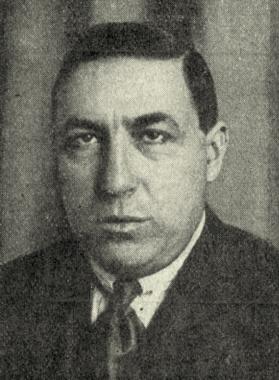
Edward Winter
Akiba Rubinstein
On page 177 of B.J.Horton’s (highly unreliable) Dictionary of Modern Chess (New York, 1959) W.H. Watts is quoted as saying that Akiba Rubinstein knew ‘by heart almost every game that has ever been played’.
(241)
W.H. Cozens (Ilminster, England) writes:
‘From the Chess Memoirs of Dr Platz (Coraopolis, 1979), page 51:
“I was present when Reuben Fine asked him (A. Rothman) ‘Is it true that you know the columns of MCO by heart?’ And he answered: ‘Yes, it is true.’”
Some of today’s young hopefuls with similar ambitions might do well to reflect that the end product of this astonishing feat was not a Karpov or a Capablanca, but ... A. Rothman.’
(413)
For further information about Rothman, see C.N.s 4930, 7350 and 7357.
From William Winter’s posthumous reminiscences on Kostić (CHESS, 1 January 1963, page 76):
‘ ... I would ask him for the score, say, of Rubinstein v Důras, Pistyan, 1912. A few moments’ concentration and out would come the moves accompanied by short expositions on the difficult points whilst I followed it on my pocket board. He was hardly ever at fault. Naturally this colossal memory served him in good stead in his practice, but occasionally it proved a drawback, as when he spent so long trying to recall what Blackburne played in a rook ending that he lost on the time-limit.’
(1164)
An endnote on page 262 of Chess Explorations:
Another side to Kostić arises from Heidenfeld’s reference, quoted in C.N. 4, to ‘the usual blarney Kostić used to dish out everywhere to endear himself to his varying audiences’.
The remark is on page 17 of Heidenfeld’s book Lacking the Master Touch (Cape Town, 1970).
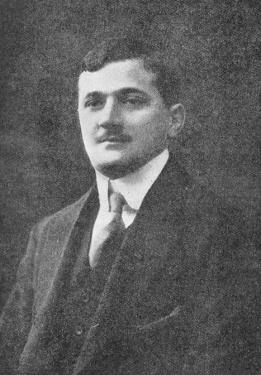
Boris Kostić
(1164)
On page 194 of My Chess Career (London, 1920) – although the page number varies in some later editions – Capablanca referred to Kostić’s ‘extraordinary memory’, adding: ‘he knows by heart every game played by a master in the last 20 years, and a considerable number of games of much older date.’
A modified version of the Cuban’s claim was commented upon by C.J.S. Purdy on page 66 of the April 1960 Chess World:
‘He is said to know by heart “every master game played in the last century”. Capablanca published this about Boris Kostić, but when, as a schoolboy, I asked Kostić if it were true he replied that it was absolute nonsense – that Capablanca had wildly exaggerated in order to enhance the value of his easy victory over Kostić in a match.’
See too ‘Purdy on Kostić (C.N. 2741) on page 418 of A Chess Omnibus.
(6331)
We note now that Purdy wrote similarly about the claim on page 293 of the Australasian Chess Review, November 1936:
‘Naturally, many people swallowed this, but Kostić told the present writer that it was a wild exaggeration ventured upon by Capablanca for effect.’
(10934)
Innumerable books and articles about Morphy report that he was able to recite the Louisiana Civil Code by heart (or ‘nearly by heart’). The State Library of Louisiana has informed us that in the 1850s the Code comprised over 3,500 Articles.
It would be of interest to establish the origins of this memory claim, and for now we merely quote an abstruse narrative regarding official Louisiana texts, from pages 141-142 of F.M. Edge’s book on Morphy:
‘On landing [in Calais], we got into a slight difficulty. Morphy speaks the French language with the purest Gallic accent, and the officials would not at first consent to his travelling with a United States passport. This our hero soon cleared up by reading the gens d’armes a précis of the settlement, manners, customs, etc., of the State of Louisiana, and his own antecedents; whereupon that official restored him his papier réglé, but confiscated a quantity of underlinen. They told us that was Customary.’
(2764)
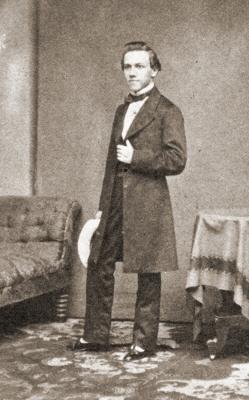
Paul Morphy
A relatively early report of Morphy having memorized the Louisiana Civil Code comes from page 7 of Paul Morphy His Later Life by C.A. Buck (Newport, 1902):
‘It should be noticed that before he was 20 years old he had graduated at college and at a law school, his learning embracing fluency in four languages and ability to recite from memory nearly the entire Civil Code of Louisiana.’
(2886)
Chess writers have frequently referred to Pillsbury’s exceptional memory, padding out their accounts with the famous list of complex words which he effortlessly learned by heart on one occasion. But on which occasion? Can a reader refer us to a precise contemporary report of that exploit?
In the meantime, we mention two lesser-known displays. The first took place in the United Kingdom on 26 March 1902, after a match between Cambridge and a Ladies’ team at the Cambridge University Chess Club. The BCM (April 1902, page 199) reported:
‘At the call of time the unfinished games were adjudicated by Mr Pillsbury, who then gave the assembled company several remarkable illustrations of his mental powers. The first illustration was the placing of a knight upon any of the squares of the chessboard that the company might select, and then, without sight of the board, Mr Pillsbury rapidly dictated move after move by which the knight, without covering any one square twice, covered each one of the 64 squares in turn. In the next illustration a pack of cards was shuffled and about 20 dealt out, each card being called. Mr Pillsbury not seeing the cards simply listened, and then rapidly and accurately called off all the remaining cards that had not been dealt. Then a list of 30 words and names, some of them most fantastic, were written down by the company, and after the list had been read over he answered correctly all enquiries as to what name appeared against particular numbers and vice versa, and then in conclusion gave the whole list backwards in proper order. These feats were all accomplished by memorizing efforts alone, and bear striking testimony to the remarkable development of his mental powers, which have already become world-famous by his successful achievement of 20 games of chess played sans voir.’
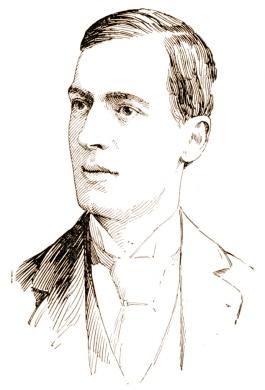
Harry Nelson Pillsbury
The second account comes from a letter entitled ‘History of St Louis Chess Club’ by Lewis T. Haller on pages 88-89 of The Gambit, November-December 1931:
‘I think the most wonderful feat I ever saw a chessplayer perform was when Pillsbury played at the Columbia Club, Vandeventer and Lindell. He played 16 games of chess and eight games of checkers, all blindfold, and took a hand at duplicate whist at the same time. He won 15 and drew one at chess, won all the checker games and the rubber of whist. During the intermission Pillsbury picked up a copy of the Post Dispatch, read a paragraph, fully one inch deep, through once and handed the paper to me. He then repeated that paragraph backwards word for word without a single mistake.’
(3144)
We revert to the complex list of words which Pillsbury is said to have learned, as related, for instance, in this ‘once’ version on pages 106-107 of The Fireside Book of Chess by I. Chernev and F. Reinfeld (New York, 1949):
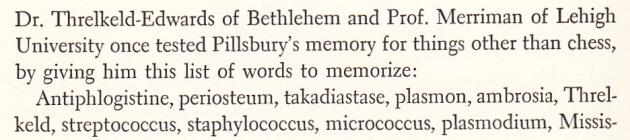
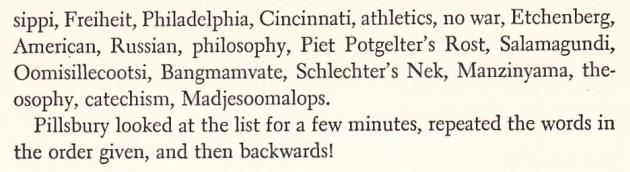
It has yet to be established when the list first appeared in print. As regards the individual words, Paul McKeown (Hayes, England) mentions an article dated 2002, ‘Piet Potgelter, Where Are You?’
That website is referred to on page 56 of Blindfold Chess by Eliot Hearst and John Knott (Jefferson, 2009), which indicates that the memory experiment was conducted by Dr Threlkeld-Edwards and Professor Merriman of Lehigh University before Pillsbury began a blindfold exhibition in Philadelphia. The book remarks too:
‘Understandably perhaps, some of these items are spelled differently in different sources. Also, the exact conditions under which Pillsbury was tested are not given consistently from source to source.’
We add that another ‘once’ version of the Pillsbury episode was supplied by Frank Rhoden on page 66 of the February 1971 Chess Life & Review:
‘His superb powers of memory made him one of the finest blindfold players ever. He was once tested by a psychologist, one Dr Maguire, before giving a 20-board simultaneous in Philadelphia. A report of this performance appeared in the Illinois Medical Journal of October 1914. Pillsbury was given a list of words to commit to memory ...’
After listing the words, Rhoden concluded:
‘Pillsbury scrutinized the list, polished off 20 opponents, and then repeated the words perfectly. For good measure, he then repeated the list backwards.’
If a reader has access to the Illinois Medical Journal we should like to see exactly what its October 1914 issue contained.
(7702)
Richard Reich (Fitchburg, WI, USA) has supplied the requested article, ‘Mental States in Famous Chess Players’ by Louis Miller, published on pages 414-418 of the Illinois Medical Journal, October 1914.
It will be noted that the article, which has a number of obvious factual errors, mentions Pillsbury’s memorization of words on page 415, but without any list.
(7710)
Jerry Spinrad has found the following report on page 3 of the Littleton
Independent of 14 December 1900:
It is not possible to present a larger version here, but, loupe à l’appui, it will be seen that the memory display is said to have taken place ‘recently’ at the Northampton Club in South Bethlehem, Pennsylvania.
Our correspondent adds that the following day the same account appeared on page 3 of another Colorado newspaper, the Eagle County Times.
(7713)
Olimpiu G. Urcan (Singapore) provides a later but clearer version of the news report shown in C.N. 7713:
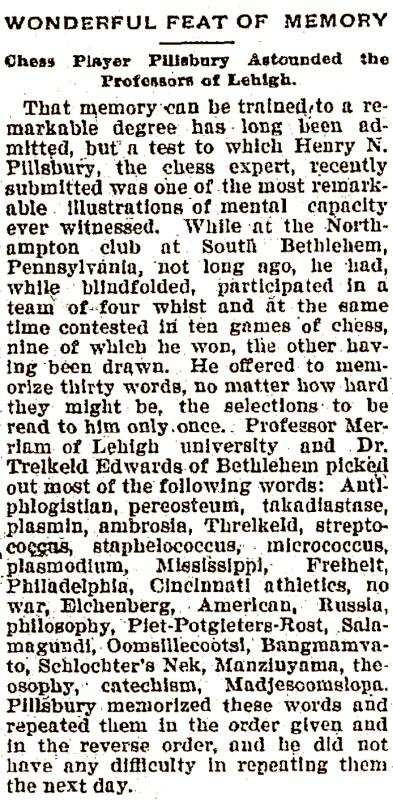
Source: page 3 of the Dona Ana County Republican (Las Cruces, New Mexico), 12 January 1901.
(7716)
See too our feature article Harry Nelson Pillsbury.
Following Blackburne’s death, B.G. Laws wrote on page 402 of the October 1924 BCM:
‘The following incident was recorded by William Geary, who died last year.
Some time in the ’70s Blackburne was a patient at St Thomas’ Hospital, and on one occasion the dispenser said to him, ‘Are you Mr. Blackburne, the chessplayer?’ On being informed he was, Blackburne was asked if he could spare a few minutes for a chat. In the course of conversation relating to memory, Blackburne was asked if he thought he could repeat from memory a few of the abbreviated Latin names on the medicine bottles. After being given a few minutes to study them our chess master offered to test himself. With no knowledge of pharmaceutical Latin or medicine it is remarkable that he not only succeeded with three or four scores of names but expressed willingness to call them all out (back turned to the shelves, of course) either forward or backward. This is a wonderful feat of memory and as hinted above made more surprising as the names had no meaning to the performer.’
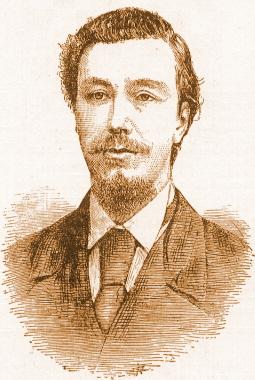
Joseph Henry Blackburne
The Chess Monthly, August 1895, page 359 referred to the ‘exceptional memory’ of one of Ladislas Maczuski’s pupils, Miss Stella, who accomplished many blindfold exploits, such as the eight-queens puzzle and the knight’s tour. The details were given in a news item on page 177 of the 15 June 1895 issue of La Stratégie:
‘Une séance d’échecs extraordinaire a eu lieu mardi 11 juin, au Café Diollot à Amiens. M. Maczuski a joué une partie d’échecs sans voir contre un groupe d’amateurs se consultant, un Gambit Evans accepté qu’il a gagné. Mais cela n’était pas le plus intéressant; M. Maczuski a présenté une de ses élèves, Mlle Stella, douée d’une mémoire vraiment prodigieuse. Successivement sur huit échiquiers, elle a résolu, sans voir, et dans huit positions différentes, le difficile problème qui consiste à placer huit dames sur un échiquier sans qu’elles s’attaquent entr’elles. La précision et la lucidité dont Mlle Stella a fait preuve ont été saluées par d’unanimes bravos. Ensuite sur six échiquiers placés côte à côte, la jeune artiste a rempli, d’une manière très rapide, toutes les cases par la marche du cavalier passant une fois sur chaque et, en reliant entr’eux par un trait certains pas du cavalier, elle a tracé les six lettres qui forment le mot “Amiens”. Pour terminer Mlle Stella, toujours suivant la polygraphie du cavalier, a dessiné les initiales de M. le Président de la République de façon qu’en additionnant les chiffres des pas du cavalier formant les lettres F.F. le total est de 430, nombre de voix par lequel le Congrès de Versailles a appelé M. Félix Faure à la première magistrature.
D’après la presse locale, le public nombreux qui assistait à cette soirée a été émerveillé et a fait une ovation à la jeune et jolie débutante.’
Capablanca described his memory, as a child, in an article on pages 94-96 of Munsey’s Magazine, October 1916:
‘I recall how the soldiers of the fort at Havana would find diversion in leading forth the clerk of the garrison – the poor wretch! – and placing him opposite me. They would then read off large sums for us to add, divide and multiply. I would invariably offer the correct answer before the clerk could get started. Furthermore, while I do not claim that my memory then was that of a Macaulay or a John Stuart Mill, yet it is a fact that at school, after a second reading of seven pages of history, I could recite them verbatim.
It is not correct to assume, however, that my chess ability depends upon an over-developed memory. In chess, memory may be an aid, but it is not indispensable. At the present time my memory is far from what it was in my early youth, yet my play is undoubtedly much stronger than it was then. Mastery of chess and brilliance of play do not depend so much upon the memory as upon the peculiar functioning of the powers of the brain.’
(3145)
Christian Sánchez (Rosario, Argentina) draws attention to an extract from an article entitled ‘The Psychology of Chess’ by H. Rogosin on pages 21-22 of Chess Review, January 1939:
‘Blackburne, the famous Englishman, in 1899 was quoted as recalling any number of games played in 1862. In the present day, Alekhine, world’s champion, is supposed to be able to recall every game of note of the last 30 years, with all their moves.’
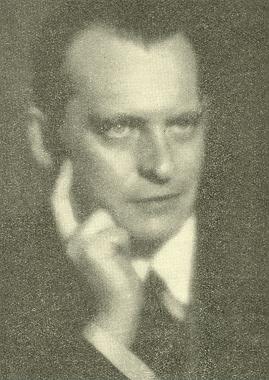
Alexander Alekhine
Regarding Alekhine, we add two comments by Capablanca:
‘Consider the fact that the great masters of truly superior class, like Alekhine and Bogoljubow, young men, know every opening variation that has been frequently used by other masters; that Alekhine, for instance, who is only 33, knows every game played in any tournament or match in the past 25 years ...’
Source: Revista Bimestre Cubana, March-April 1926.
‘He has what is probably the most marvelous chess memory that ever existed. It is said that he knows by heart every game played in any tournament by either a first-class club player or a master during the last 25 or 30 years. He certainly knows by heart all of the games ever played by any of the first-class masters.’
Source: New York Times, 19 February 1927, page 10.
As regards his own memory, Capablanca wrote:
‘... as I have grown older – in fact since I became a first-class chessplayer – I have always tried to forget everything which I have not considered essential to remember, and I have succeeded so well in my training that I now have difficulty in remembering things in general. It so happens, now, that while there are several experts who remember every serious game I have played in the last 22 years, I can hardly remember a single one of them. A game played today I may hazily keep in my head for a few weeks, but after that it is gone forever. No doubt my present poor memory is a cultivated one. I have been influenced to adopt this system in order to avoid loss of sleep after a hard struggle at night. Thus I can go to sleep right after a game, whether I win or lose, and one hour after a long, strenuous, simultaneous séance against any number of opponents I may be found peacefully sleeping in my bed.’
Source: The English Review, November 1922, pages 459-462.
The full context of these quotes is provided in our book on Capablanca (pages 130, 156-157 and 121-122 respectively).
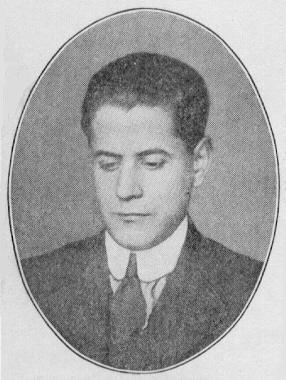
José Raúl Capablanca
(5010)
For an alleged case concerning Paul Morphy’s chess memory, see C.N. 8717. For claims concerning Milan Matulović, see pages 16-17 of Chess is Chess by Aleksandar Matanović (Belgrade, 1990).
A player and theoretician seldom referred to nowadays is Carel van den Berg (1924-71). A reference to his memory is on page 124 of How Chess Games are Won by Samuel Reshevsky (New York and London, 1962):
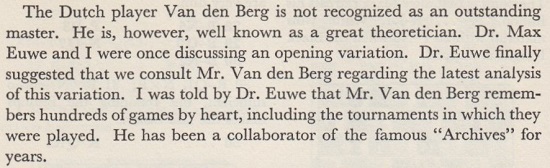
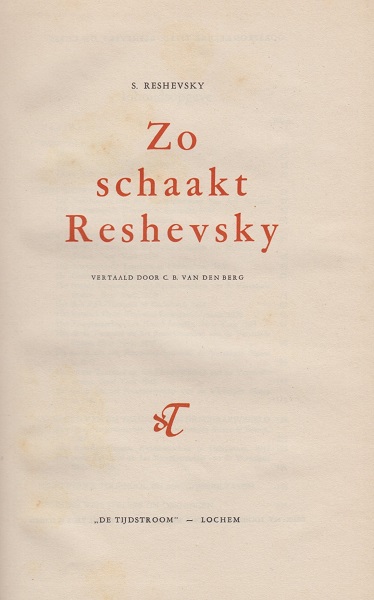
Reshevsky on Chess (New York, 1948) was translated into Dutch by van den Berg under the title Zo schaakt Reshevsky (Lochem, 1950):
(9081)
A remark by Imre König about Leonard Barden in a report on the 1949 British championship in Felixstowe:
‘Barden’s knowledge of theory is extraordinary, he is a walking compendium of MCO and Bilguer.’
Source: BCM: September 1949, page 312.
After quoting this on page 282 of the 1 December 1949 Chess World, C.J.S. Purdy wrote:
‘Understatement! He is years ahead of the latest editions of both. Barden is 20 – a modern history student at Oxford.’
(9348)
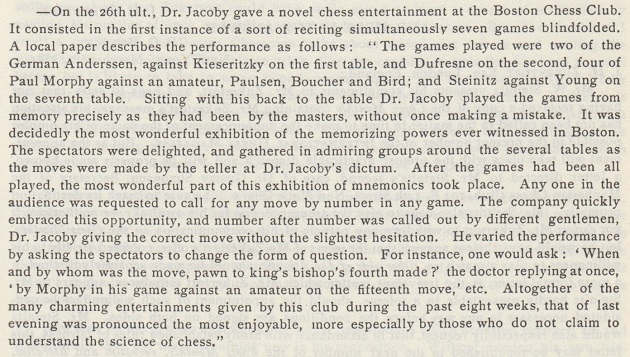
A brief feature on Paul Morphy’s memory was published on page 34 of Lasker’s Chess Magazine, November 1905.
From page 107 of the April 1885 International Chess Magazine:
(10420)
Extracts from the article ‘Reflections after Reykjavik’ by Gerald Abrahams on pages 84-90 of Encounter, March 1973 were given in C.N. 10497 and included the following:
‘One truth about chess is that memory is more likely to be a handicap than an advantage. There comes a stage in every game when the player has to find not what Botvinnik decided years ago but what he now is called upon to play. Then, if he has been too reliant on memory, he will fail to produce the ideas that constitute bright chess. The windows of his mind are curtained to exclude ideas from floating in. His vision will be limited because he has not sufficiently exercised it. Because of their independence, players like Fischer and Spassky (and they are not the only ones) are convincing refuters of Capablanca’s pessimistic pronouncement, 40 [sic] years ago, that chess would soon be “played out”.’
C.N. 7702 (see above) showed an extract from pages 106-107 of The Fireside Book of Chess by I. Chernev and F. Reinfeld (New York, 1949):
The same C.N. item quoted another ‘once’ version, by Frank Rhoden on page 66 of the February 1971 Chess Life & Review:
Pillsbury ‘... was once tested by a psychologist ...’
Now, we add the following from page 354 of Chess Words of Wisdom by Mike Henebry (Victorville, 2010):
‘He once memorized 30 difficult, unusual and large words that were read to him only once. He read them backwards and forwards without error and even remembered them the next day.’
However, in that passage the ‘he’ was not Pillsbury, but Blackburne.
Earlier in the same paragraph, Mr Henebry had a sentence about Blackburne which began:
‘He was once showed ...’
On the next page, still in the Blackburne section:
‘Once, playing blindfold, he announced ...’
The following paragraph was a quote from a Santasiere/Smith book. It began:
‘Once when Blackburne was giving a simultaneous exhibition ...’
After Blackburne there was a section on Steinitz, with more of the same. From page 359:
‘A story goes that once, he was arrested as a spy!’
(10515)
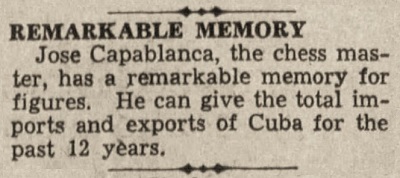
An unverified claim published on page 16 of the Scranton Tribune, 10 May 1937:
From pages 35-36 of Nimzowitsch’s book on Carlsbad, 1929 (Dover Publications, New York, 1981):
‘On the whole, I have a hard time remembering someone else’s published analysis, a failing I have no cause to regret. Such analysis is in most cases simply ballast, weighing down the free flight of fantasy!’
(511)
To the Chess Notes main page.
To the Archives for other feature articles.
Copyright: Edward Winter. All rights reserved.